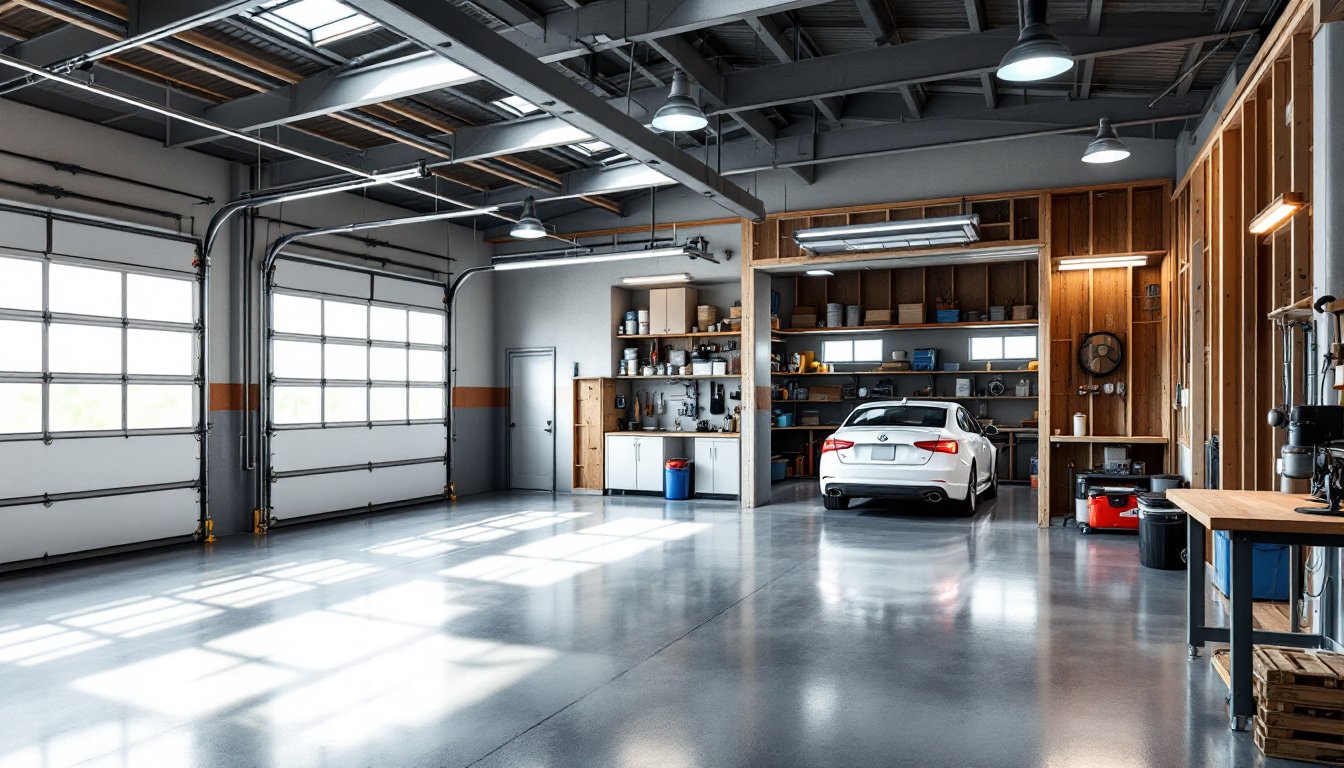
Planning a 3-car garage with workshop space is one of the smartest home improvement investments a DIYer can make. It’s not just parking, it’s a foundation for hobbies, storage, and potentially resale value. Whether someone needs room for vehicles, woodworking, automotive restoration, or general storage, a well-designed 3-car garage with integrated workshop solves multiple problems under one roof. This guide walks through layout decisions, sizing, materials, utilities, and budgeting to help turn that vision into reality. The key is planning ahead: rushing into foundation pours or framing without thinking through workshop placement and electrical needs leads to costly mistakes down the road.
Table of Contents
ToggleKey Takeaways
- A 3-car garage with workshop should measure 30–36 feet wide by 24–28 feet deep with the workshop zone positioned at the rear or side to separate oily tools and sawdust from parking areas.
- Proper foundation design is critical: use a 4-inch concrete slab on a gravel base with frost-protected footings in freeze-thaw regions, sloped slightly for drainage to prevent settling and cracking.
- Effective workshop integration requires a 10-by-12-foot minimum zone with a sturdy 36-by-48-72 inch workbench, wall-mounted storage (pegboards, slatwall, or shelving), and LED shop lighting to maximize functionality and safety.
- Electrical planning demands a licensed electrician and 200-amp subpanel with 20–30 dedicated circuits, GFCI-protected outlets every 6 feet, and separate 240-volt circuits for high-draw equipment like compressors or welders.
- Budget $35–65 per square foot ($25,000–65,000 for 800 square feet) and plan a 3–6 month timeline, prioritizing professional work for foundation, electrical, and permits while phasing interior finishing to stay on budget.
Planning Your 3-Car Garage Layout
Essential Design Considerations
Before breaking ground, sketch out the space. A standard 3-car garage runs about 32 feet wide by 24 feet deep, but local building codes and lot size dictate what’s actually possible. The garage needs to accommodate three vehicles (each roughly 9 feet wide) with wall access on both sides for doors and future expansions.
Decide early where the workshop zone lives. Pushing it to the rear or one side keeps oily tools and sawdust separated from parking areas. A 10-by-12-foot corner section works for a basic woodworking or mechanics shop: larger projects demand more. Access matters too, workshop traffic should avoid disrupting the main parking lane.
Consider the overhead door swing. A standard 9-by-7-foot overhead door clears most vehicles, but measure client vehicles beforehand. If anyone has a truck with a roof rack or taller vehicle, bump up to a 9-by-8-foot option. Left, center, or right placement affects interior layout significantly.
Think about future use. Today it’s a hobby shop: tomorrow someone might run a small business from it. Zone the space flexibly, movable workbenches and modular shelving beat built-in setups that can’t adapt. Account for electrical outlets, compressed air lines, or water access if the workshop might grow.
Sizing And Foundation Requirements
A 3-car garage with an integrated workshop typically runs 30–36 feet wide by 24–28 feet deep, totaling roughly 720–1,000 square feet. Check local zoning codes first, some municipalities cap garage size relative to the main house, and a few require setback distances from property lines.
The foundation is non-negotiable. A standard 4-inch concrete slab on a gravel base works for most climates, but in freeze-thaw regions, the slab must sit on a frost-protected footings at least 4 feet below grade, check your area’s frost line depth with the local building authority. Reinforcement varies: some codes demand 4-inch rebar grid on 24-inch centers, while others accept a lighter mesh. Hire a concrete contractor to grade, compact, and pour correctly: amateur foundation work causes cracking and settling issues that compromise vehicle safety.
Slope the slab slightly (around 1/8-inch per foot) toward the overhead door or a floor drain for water drainage. A workshop area may benefit from a 5–6-inch slab in high-traffic zones to handle rolling equipment and impact loads.
In wet climates, add perimeter drains and a moisture barrier under the slab to prevent pooling and efflorescence staining. Cost and soil conditions vary regionally, so get local quotes before finalizing the design.
Workshop Integration And Storage Solutions
A dedicated workshop zone transforms a garage from storage into a functional maker’s space. Carve out 10–15 feet of wall length for a main workbench, 36 inches deep by 48–72 inches wide is ideal for assembly, repairs, or small projects. Mount it on heavy-duty 2-inch steel legs or hardwood supports rated for 400+ pounds of distributed load.
Storage is the hidden workhorse. Wall-mounted pegboards, slatwall, or shelving units keep hand tools visible and organized without consuming floor space. Industrial metal shelving units (like 48-inch-wide by 18-inch-deep units on steel frames) hold paint, supplies, and materials without wobbling. Budget about $400–800 for a decent modular shelving system that covers two walls.
Cabinets matter for lockable storage, especially if hazardous materials or expensive tools live in the garage. A steel base cabinet bank costs more upfront but resists moisture and impacts better than wood. Consider air compressor placement too, wall-mounted or corner-tucked compressors with quick-connect lines throughout the space boost efficiency without eating floor real estate.
Floor coatings protect concrete from stains and spills. An epoxy or polyurethane system ($1.50–3.00 per square foot) makes cleanup easier and looks sharp. Prep the slab thoroughly: grind away contaminants, etch with acid or concrete cleaner, and let it cure fully before sealing.
Lighting is critical for safety and precision work. Overhead LED shop lights on 4-foot fixtures (80+ lumens per watt) eliminate dark corners, and workbench-level task lighting (LED strip or clip lamps) prevents eyestrain during detail work.
Building Materials And Construction Methods
Frame the walls with standard 2×4 lumber (1.5 inches actual width) on 16-inch centers. Load-bearing walls dividing the workshop from the parking area must be properly braced: non-load-bearing dividers can be lighter but still need solid blocking for cabinet mounting and future use.
Roof framing depends on span and local snow/wind loads. Most 3-car garages use 2×6 or 2×8 rafters at 16-inch centers, sloped for water runoff. If the workshop will have a separate roof zone, confirm with a structural engineer that the framing handles any additional hanging loads (heavy equipment, storage above the workspace).
Siding and cladding matter for durability and aesthetics. Vinyl, fiber cement board, or wood can all work, but in damp climates, fiber cement resists moisture better and lasts 25+ years with minimal maintenance. Exterior walls benefit from a housewrap or weather barrier behind the cladding to shed water and slow air infiltration.
Internalwalls can be drywall, OSB, or left open, depends on the space’s purpose. A workshop often skips full drywall to save cost and make future rewiring easier: exposed studs are fine, but add trim around the slab perimeter to catch water splash and reduce maintenance.
Doors should be solid or heavy-duty hollow-core (not cheap interior doors). A 36-inch single or 32-inch pair between parking and workshop zones allows equipment movement and maintains privacy if needed.
Electrical, HVAC, And Utility Planning
Electrical is where most DIYers need a licensed electrician, especially for a large garage. A 3-car garage with workshop tools easily demands a 200-amp subpanel fed from the main service. Plan for at least 20–30 dedicated circuits: split between parking (lighting, outlets) and workshop (tools, compressor, heater). The National Electrical Code (NEC) requires GFCI protection on all 120-volt outlets in garages, and dedicated circuits for high-draw equipment like air compressors or welders.
Outlet placement is crucial. Space 120-volt outlets every 6 feet around the perimeter and on the workbench. If running a 240-volt welder, dust collector, or compressor, that demands a dedicated 40–50 amp circuit directly from the panel, don’t improvise. Run conduit for future expansion: the upfront cost of extra runs now beats tearing into walls later.
Lighting: Install LED shop light fixtures wired to dedicated 20-amp circuits. Natural light through skylights or windows reduces electric load and improves morale: add motion sensors or timers in storage-only zones to cut waste.
HVAC and ventilation depend on climate and use. In cold regions, a radiant or ceiling-mounted garage heater (propane or electric) keeps temperatures livable in winter. In humid areas, exhaust fans with make-up air dampers prevent moisture buildup and odor accumulation. A workshop running power tools demands dust collection and air quality control, even a basic wall-mounted dust collector ($300–500) beats letting sawdust and fumes settle everywhere.
Water lines to a floor sink or wash station add value. A simple 1/2-inch supply line and 2-inch drain can be run during framing to avoid later cutting and patching.
Budgeting And Timeline For Your Project
A 3-car garage with workshop runs $35–65 per square foot fully finished, meaning $25,000–65,000 for an 800-square-foot structure. That wide range reflects regional labor costs, material quality, and finish level. A bare-bones pole barn with concrete slab might cost $25,000–35,000: a fully insulated, wired structure with workshop cabinets and HVAC runs $50,000+.
Break costs into phases: site prep and foundation ($8,000–12,000), framing and roofing ($10,000–18,000), exterior and doors ($6,000–10,000), and interior finish with electrical and utilities ($8,000–25,000+). If hiring labor, electrical and foundation work are non-negotiable professional tasks: framing, siding, and finishing can be DIY to save money.
Timeline typically runs 3–6 months from permit approval to move-in. Winter and rainy seasons slow concrete curing and exterior work: plan accordingly. Obtain permits early, inspection delays are common, and unpermitted work tanks resale value.
Tips to stay on budget: buy standard sizes (standard overhead doors, lumber lengths, electrical fixtures), reuse salvaged materials where safe, and phase finishing (park and store first, cabinetry later). Avoid scope creep, decide on workshop size and utilities upfront to prevent mid-project changes that multiply costs.
Get multiple quotes from local contractors for site work, concrete, framing, and electrical. Regional material costs and labor rates vary wildly: a contractor in rural Iowa quotes very differently from one in suburban Boston.