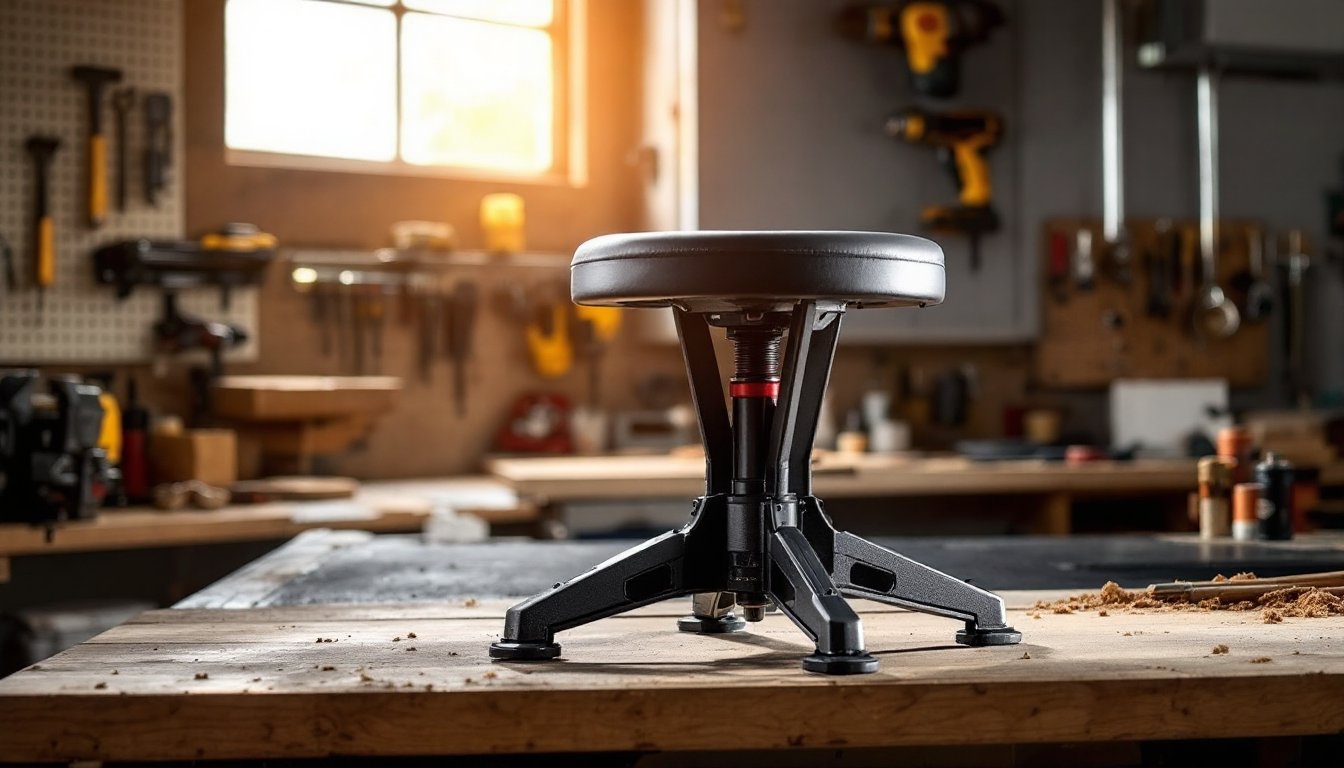
A garage stool isn’t just a place to rest, it’s part of your workspace setup, and picking the wrong one can turn a comfortable project into an uncomfortable slog. Whether someone’s rebuilding an engine, working on cabinetry, or tackling detailed assembly work, they need a seat that won’t wobble, collapse, or leave them with a sore back after two hours. Milwaukee Tools garage stools deliver the kind of no-nonsense durability and thoughtful features that serious DIYers and professionals expect. This guide walks through what separates a quality garage stool from the throwaway kind, highlights the features that actually matter on the job, and shows how to pick the right model to match a specific workspace.
Table of Contents
ToggleKey Takeaways
- Milwaukee Tools garage stools combine industrial-grade materials with practical design features like stability, high weight capacity (250-300+ pounds), and durable, easy-to-clean cushioned seats that resist shop grime and oils.
- Proper height adjustability (17-25 inches is ideal for most workbenches) with smooth pneumatic gas lifts, contoured seats, and adjustable footrests are essential features that reduce fatigue and improve comfort during extended work sessions.
- Material quality matters: look for industrial-grade steel frames with powder-coat finishes, welded joints, vinyl or polyurethane upholstery, and at least 2-3 inches of high-density foam to ensure a Milwaukee garage stool won’t deteriorate in two years.
- Milwaukee’s range includes the Adjustable Work Stool (300-pound capacity, 17-25 inch range) for general use and the Heavy-Duty Shop Stool (20-28 inch range) for taller workbenches and extended sessions, plus models with backrests for added lower-back support.
- Maximize your garage workspace by matching stool height to your bench (elbows at roughly 90 degrees), positioning it within arm’s reach of the work area, and organizing tools nearby to eliminate awkward reaches and stretches.
- Replaceable seat and base components on Milwaukee stools mean you can service and extend the stool’s lifespan rather than replacing the entire unit when wear occurs.
What Makes Milwaukee Tools Garage Stools Stand Out
Milwaukee Tools built its reputation on rugged equipment designed for real work. Their garage stools reflect that philosophy, they’re engineered for the shop floor, not a showroom. Unlike generic stools that feel flimsy or cheap, Milwaukee stools combine industrial-grade materials with practical design details that address actual pain points.
The brand prioritizes stability and weight capacity. Most Milwaukee garage stools handle loads of 250 to 300+ pounds, which means they’re built to last through years of heavy use without sagging or developing that annoying lean. The bases are wide and weighted, so a stool won’t tip if someone shifts suddenly or reaches across a workbench.
Milwaukee also invests in seating surfaces that won’t compress flat after a season. Cushioned seats use dense foam and durable upholstery that resists oils, grease, and shop grime. That matters, a shop seat takes a beating, and a quality seat maintains its support when it needs it most. The stools are also easy to clean: a quick wipe with a damp cloth removes sawdust and spills without degrading the material. That practical thinking is what separates a tool-company stool from furniture that just happens to exist in a garage.
Key Features to Consider When Selecting a Garage Stool
Not all garage stools are created equal. Before pulling the trigger on a purchase, a buyer should evaluate several features that directly affect comfort and longevity on the job.
Height Adjustability and Comfort
Adjustability is non-negotiable. A garage stool with a 17- to 25-inch adjustable height range handles most workbench heights, standard benches sit around 34 to 36 inches, and a stool seat should rest 10 to 12 inches below that for comfortable arm positioning. Look for smooth height adjustment mechanisms: pneumatic gas lifts (the kind used on office chairs) adjust with a single lever and hold position reliably. Threaded screw adjusters work but require more fiddling and can slip if overtightened.
Seat shape matters too. Contoured or slightly dished seats distribute pressure better than flat pads, reducing fatigue during long sessions. A footrest at the right height takes strain off the legs, check that it adjusts along with the seat height. Some Milwaukee models include 360-degree swivel bases, which saves reaching and twisting the whole body.
Durability and Material Quality
Material choice filters out stools that’ll end up in a dumpster in two years. Industrial-grade steel frames with powder-coat finishes resist rust and corrosion. Welded joints are stronger than bolted ones, though bolted frames that use stainless hardware won’t corrode in damp shops. Check the base design: spreading legs (often at a 45-degree angle) provide more stability than straight, narrow legs.
Upholstery and cushioning deserve inspection. Vinyl or polyurethane covers clean easily and shed oils: fabric collects grime and stains. Look for thickness, cushioning should be at least 2 to 3 inches of high-density foam, not flimsy compressed material that bottoms out. Stitching should be tight and reinforced at stress points (where the seat meets the base). A stool that creaks or shifts after a few months probably cut corners on the frame or joints.
Popular Milwaukee Stool Models and Their Benefits
Milwaukee offers a range of garage stools, each tuned for different work styles. Understanding the lineup helps a buyer match a stool to their actual needs.
The Milwaukee Adjustable Work Stool is the bread-and-butter choice. It features a height range of 17 to 25 inches, a 300-pound weight capacity, and a pneumatic lift for smooth adjustment. The padded seat is firm without being rock-hard, and the base is stable enough for detailed assembly work or bench grinding. It’s a solid workhorse, nothing flashy, but nothing disappoints either.
The Milwaukee Heavy-Duty Shop Stool is built for taller workbenches and extended sessions. With a higher seat range (20 to 28 inches) and extra cushioning, it pairs well with elevated workstations or machinery. The wider base and reinforced frame handle rougher shop environments, these stools show up in commercial garages and fabrication shops for good reason.
Some Milwaukee models include a backrest, a game-changer for people who spend hours at a bench. Backrests add support for the lower back and reduce slouching, which cuts fatigue significantly. They add a few inches to the footprint, so measure the workspace before committing.
All Milwaukee stools use replaceable seats and bases, which means if something does wear out, a user isn’t buying a whole new stool. Parts availability and the ability to service a stool matter just as much as the initial purchase.
How to Maximize Your Garage Workspace With a Quality Stool
A good stool is only half the equation. Positioning and workspace setup determine whether that stool becomes indispensable or sits unused.
Start by matching the stool height to the work surface. Measure the bench or workbench, then set the stool so the seated elbow sits at a natural angle to the work, roughly 90 degrees or slightly higher. Too low and the shoulders hunch: too high and the wrists bend awkwardly. Test the setup before committing to long sessions: an hour of off-angle work reveals problems fast.
Position the stool where it won’t interfere with foot traffic or projects. A stool in the corner of the garage stays out of the way but should still be within arm’s reach of the main work area. If the shop has multiple benches, consider a second stool or a mobile model that rolls on locking casters.
Keep the workspace organized around the stool. Store frequently-used tools and materials within reaching distance, a pegboard on the wall above the bench, bins at arm level. This reduces the temptation to stretch or reach awkwardly, which is when accidents happen and comfort drops. A quality stool with a 360-degree swivel base lets someone pivot to access different areas without standing and reseating repeatedly.
Maintenance is straightforward. Wipe the seat and base after each session to prevent buildup of sawdust and oils. Tighten any bolts seasonally, vibration from power tools can loosen fasteners over time. If the pneumatic lift starts to sag, it’s usually a simple replacement: check the manufacturer’s parts list rather than tossing the whole stool.
Conclusion
Choosing a garage stool comes down to honest assessment: How long does someone sit during projects? What bench height do they work at? How much space is available? A Milwaukee Tools garage stool delivers the durability and comfort that justify the cost, especially for serious DIYers who spend hours per week in the shop. The right stool makes long sessions comfortable, keeps the workspace organized, and lasts years without falling apart. Take time to test the height and cushioning before buying, and pick a model with the features that match the actual work, then get to it.