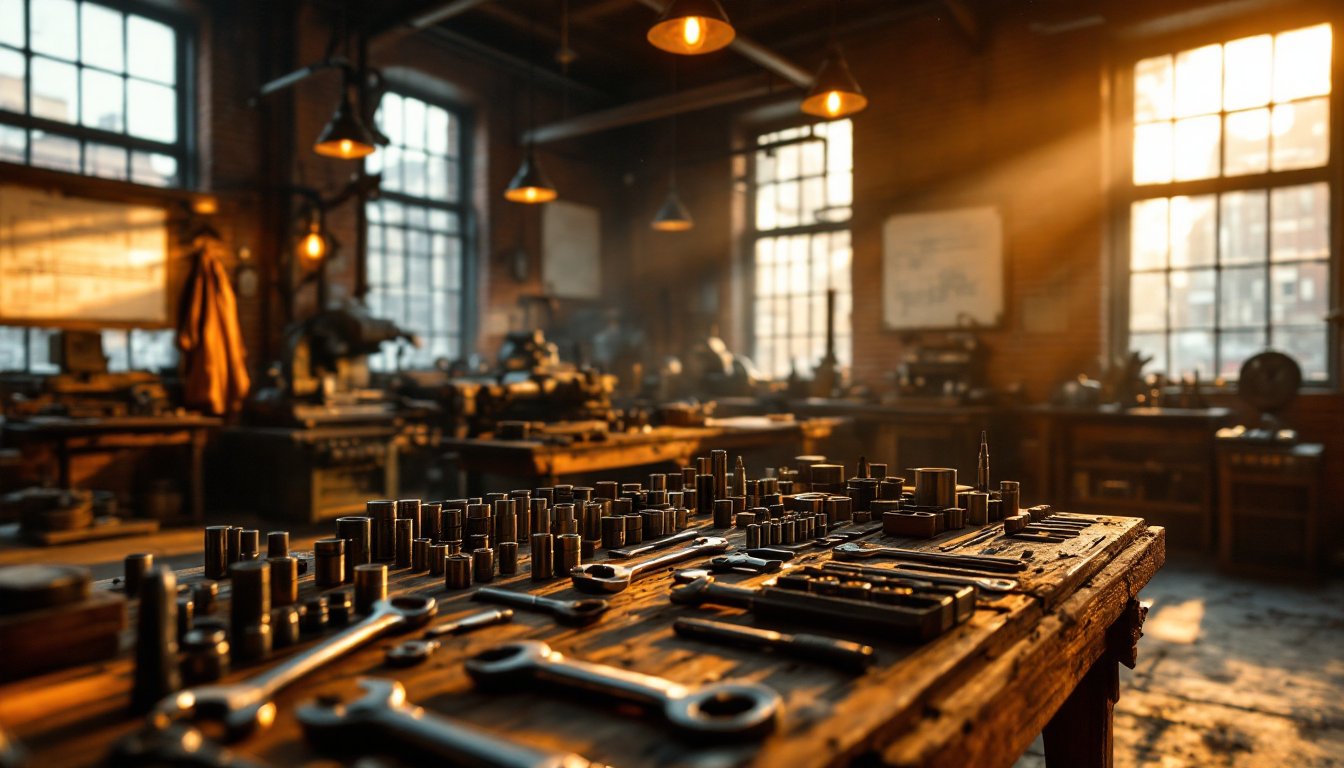
Milwaukee Tools didn’t start as a billion-dollar manufacturer, it began in a single workshop in Milwaukee, Wisconsin, in 1924. What started as a screwdriver and socket set business grew into one of the most trusted names in professional power tools and hand tools. For over a century, Milwaukee Tools has shaped how contractors, electricians, carpenters, and serious DIYers approach their work. The company’s relentless focus on innovation, durability, and solving real problems on job sites has made it synonymous with reliability. Understanding the history of Milwaukee Tools reveals not just how one American company succeeded, but how it continuously reinvented itself to stay ahead in an intensely competitive industry.
Table of Contents
ToggleKey Takeaways
- Milwaukee Tools was founded in 1924 by Jackson and Aaron Feigenbaum as a hand-tool manufacturer in Wisconsin, establishing a reputation for durability and precision that has lasted over a century.
- The company’s strategic focus on battery platform standardization through RED LITHIUM and later M18 and M12 systems transformed Milwaukee Tools into a leader during the cordless revolution of the 1980s and 1990s.
- Milwaukee Tools’ history demonstrates how professional brand loyalty is built through solving real job-site problems rather than relying on marketing alone, making it the tool of choice for contractors and electricians.
- From hand tools in the Depression era to over 600 products by 2020, Milwaukee Tools’ continuous product diversification and technological innovation—including brushless motors, ONE-KEY software, and hybrid power options—keep it competitive globally.
- Techtronic Industries’ 2005 acquisition preserved Milwaukee Tools’ quality standards while enabling aggressive global expansion, now serving contractors in over 100 countries across multiple trades.
The Founding Years and Early Innovation
In 1924, Jackson and Aaron Feigenbaum founded Milwaukee Tools with a simple mission: manufacture high-quality hand tools that professional tradespeople could rely on. The brothers started small, crafting screwdrivers, sockets, and other hand tools in a modest workshop. Their reputation grew quickly among Milwaukee’s construction and electrical contractors, who valued durability and precision over cheap alternatives.
What set them apart early was attention to detail. While competitors cut corners, the Feigenbaums insisted on proper heat treatment, accurate tolerances, and ergonomic design. By the 1930s, Milwaukee Tools was supplying electricians and carpenters across Wisconsin and expanding into neighboring states. The Depression-era economy actually helped, contractors couldn’t afford to replace broken tools, so they sought out ones built to last. Milwaukee’s hand tools became known for outliving cheaper competitors by years, sometimes decades.
Building the Professional Reputation
By the 1940s and 1950s, Milwaukee Tools had established itself as a premium hand tool manufacturer. The company expanded its product line to include adjustable wrenches, nut drivers, and specialized tools designed for specific trades. Electricians, in particular, became loyal customers, the company’s insulated tools and precision socket sets were industry standards.
After World War II, Milwaukee Tools recognized an opportunity in the booming construction industry. Returning soldiers entered the trades, housing boomed, and demand for reliable tools skyrocketed. The company expanded its manufacturing capacity and distribution network, moving beyond regional sales into national markets. By the 1960s, Milwaukee Tools had become a household name among professionals, competing with established brands but carving out a distinct identity built on ruggedness and precision.
Industrial Growth Through the Mid-20th Century
The 1960s and 1970s marked Milwaukee’s transition from a hand-tool-only company to a diversified manufacturer. The construction industry was changing, pneumatic and early electric tools were gaining traction. Milwaukee Tools invested heavily in research and development to create professional-grade electric drills and saws. These weren’t consumer-grade tools from hardware stores: they were engineered for daily job-site abuse.
The company’s reputation for durability served it well. Contractors who trusted Milwaukee hand tools tried the power tools, found they worked as well as advertised, and became repeat customers. By the 1970s, Milwaukee Tools was generating significant revenue from both hand and power tools, with distribution across North America and growing interest internationally.
The Cordless Revolution and Market Expansion
The 1980s and 1990s brought a watershed moment: battery technology matured enough to make cordless tools practical for professionals. Milwaukee Tools seized the opportunity earlier than many competitors, developing reliable cordless drills, impact drivers, and reciprocating saws. The company understood that contractors didn’t care about features, they cared about runtime, charge time, and whether the tool would last through a shift.
Milwaukee’s battery platform strategy proved crucial. By standardizing batteries across multiple tools, contractors could build an ecosystem: invest in batteries and a charger once, then buy any tool that fit the platform. This approach became the industry standard, and Milwaukee’s RED LITHIUM batteries became legendary for holding voltage under load and lasting through years of use.
The 1990s saw explosive growth. Big-box retailers like Home Depot expanded nationwide, and Milwaukee Tools moved aggressively into consumer DIY markets while maintaining its professional focus. The company acquired or partnered with complementary brands, including Dewalt (later sold to Black & Decker), Sawzall, and other manufacturers. This diversification reduced risk and let Milwaukee serve different market segments without diluting its premium professional brand.
Modern Era and Global Dominance
In 2005, Techtronic Industries (a Hong Kong-based manufacturer) acquired Milwaukee Tools, providing capital for aggressive global expansion and product development. The acquisition preserved Milwaukee’s brand identity and commitment to quality, a critical concern for contractors worldwide.
Under new ownership, Milwaukee Tools doubled down on innovation. The company introduced M18 and M12 platforms, modular battery systems that let professionals choose between power-hungry 18-volt tools and compact 12-volt ones depending on the job. The flexibility appealed to contractors juggling different tasks, and the strategy worked. Milwaukee’s market share grew steadily through the 2010s, competing directly with Dewalt, Makita, and Bosch for contractor loyalty.
Milwaukee also invested heavily in connected tools and job-site technology. FUEL series brushless motors delivered more runtime and power per charge than competitor models. The company added features like LED work lights, ergonomic redesigns, and tool-tracking technology. These weren’t gimmicks, they directly addressed pain points contractors experienced on real job sites.
Technological Advancements and Product Diversification
By 2020, Milwaukee Tools offered over 600 products across power tools, hand tools, accessories, and safety equipment. The company dominates in hammer drills, circular saws, angle grinders, and band saws, workhorse tools found on nearly every active job site in North America.
Recent innovations show the company’s commitment to evolution. ONE-KEY software lets contractors track tool location, manage maintenance schedules, and optimize inventory through a smartphone app. FORCE LOGIC hydraulic tools combined traditional manual leverage with modern materials science for safer, more efficient operation. In 2023 and 2024, Milwaukee Tools continued launching brushless tools with extended battery life and added hybrid power options that let cordless tools run on wall power when stationed.
The company remains privately owned by its parent corporation but operates with significant autonomy. Manufacturing facilities operate in the US, Mexico, and Asia, ensuring supply chain resilience and competitive pricing. Milwaukee’s distribution spans over 100 countries, and the brand is trusted in industries from construction and electrical work to plumbing, HVAC, and demolition.
Conclusion
From a two-man workshop in 1924 to a global power tool empire, Milwaukee Tools’ history reflects a commitment to solving real problems for professionals. The company succeeded by listening to contractors, investing in durability and innovation, and refusing to cut corners. Today, contractors choose Milwaukee not out of brand loyalty alone, but because the tools deliver on the job. That uncompromising approach, born in that original Milwaukee workshop, remains the foundation of everything the company builds.