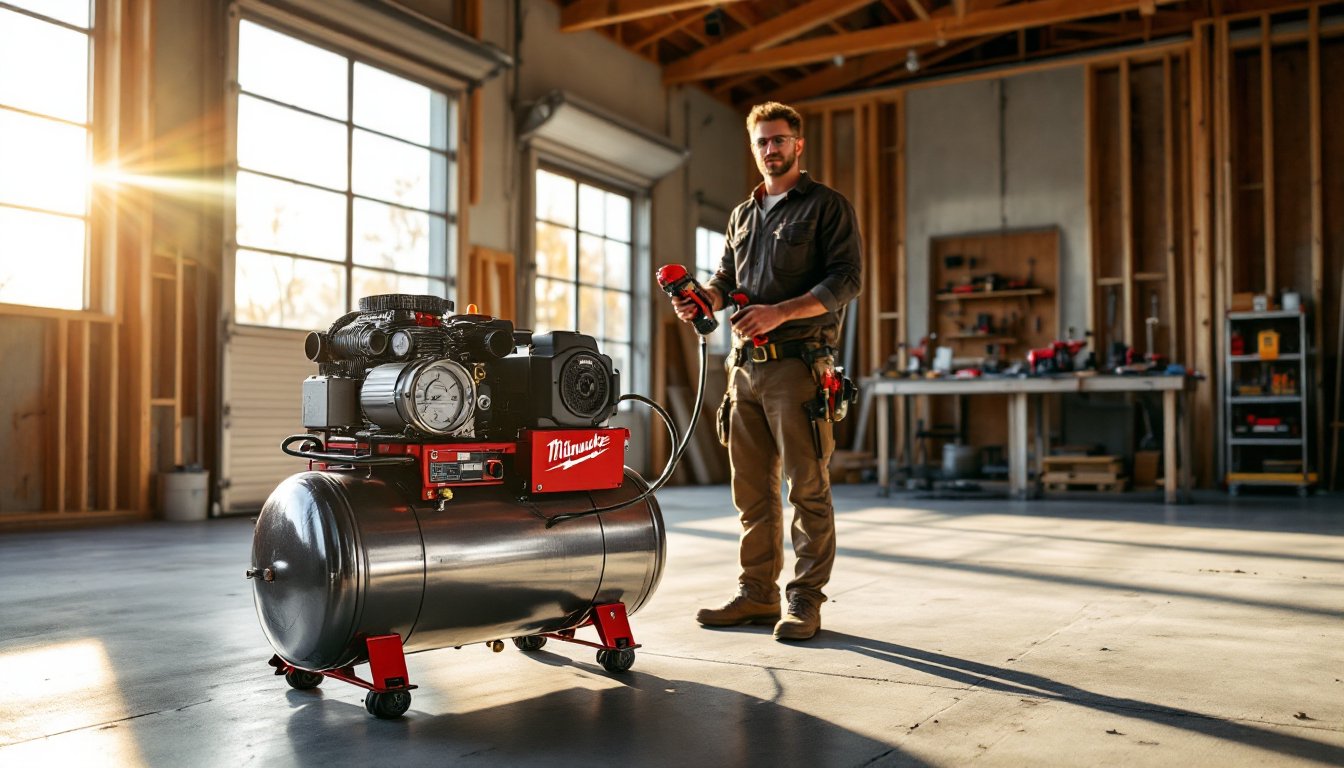
Milwaukee has earned its reputation in the power tool space, and their air compressor lineup proves they understand what jobsites demand. Whether someone’s framing a garage, running a nail gun on a remodel, or doing detail work with a die grinder, a Milwaukee air compressor delivers the PSI and CFM needed without the headaches of unreliable equipment. The brand’s compressors combine Milwaukee’s engineering philosophy, tough, efficient, and built to last, with practical features that matter in real projects. This guide breaks down what separates Milwaukee compressors from the pack, which models fit different tasks, and how to keep one running strong for years.
Table of Contents
ToggleKey Takeaways
- Milwaukee air compressors are engineered with industrial-grade pumps and robust electrical systems to handle frequent use and demanding jobsite applications without failure.
- Choose portable Milwaukee models (M18 cordless or 3-HP electric) for mobility and light work, or stationary 5-HP to 7-HP units with 60-80 gallon tanks for continuous shop use and running multiple tools simultaneously.
- CFM (airflow volume) is the critical metric—verify your pneumatic tool’s CFM requirement before purchasing, as a compressor with insufficient CFM will underperform and overwork the motor.
- Daily tank drainage and regular oil changes (on lubricated models) are essential maintenance tasks that prevent rust, corrosion, and pump damage, extending compressor life for decades.
- Milwaukee air compressors feature thermal overload protection, automatic pressure switches, and practical design elements like easy-access drain plugs and wheel placement that reduce downtime on jobsites.
- Tank size matters: larger tanks (60+ gallons) buffer demand spikes and reduce motor cycling, while smaller tanks (5-20 gallons) suit intermittent and mobile work where weight is a constraint.
Why Milwaukee Air Compressors Stand Out From the Competition
Milwaukee air compressors earn their place on jobsites because they’re engineered for reliability and performance, not just marketed as such. The brand uses industrial-grade pumps and robust electrical systems designed to handle frequent use and demanding applications. Build quality matters: a compressor that fails halfway through a roofing job or coating project costs time and money that no discount can offset.
Milwaukee also integrates their ecosystem thinking into compressor design. Contractors who already own Milwaukee drills, grinders, and saws expect the same durability from their compressed-air tools. The compressors deliver that consistency. Many models feature advanced pump designs with oil-free or splash-lubricated systems that reduce maintenance compared to older compressor types. Thermal overload protection and automatic shutoff prevent burnout during extended runtime, a real problem on hot days or in confined spaces.
Another advantage is Milwaukee’s attention to practical details. Tank design minimizes water buildup in hot climates, drain plugs are positioned for easy access, and wheel placement makes repositioning equipment on uneven ground less frustrating. The company also offers a robust warranty and nationwide support, meaning parts and service aren’t a guessing game.
Top Milwaukee Air Compressor Models for Every Job
Milwaukee’s lineup spans from ultra-compact portables to serious stationary rigs. Finding the right one depends on PSI needs, CFM delivery, and workspace constraints.
Compact Portable Models
The Milwaukee M18 2-Gallon Compact Air Compressor (and similar cordless-powered variants in their lineup) targets DIYers and contractors who need portability without sacrificing power. These units run on Milwaukee’s M18 or M12 battery platforms, eliminating the need for a power cord or gas engine. They deliver adequate CFM for nailers, brad guns, and light finishing work. Weight under 30 pounds makes one-handed carrying realistic. Drawback: cordless compressors aren’t suitable for high-demand continuous work like sandblasting or heavy-duty grinder use. Batteries also deplete faster in cold weather.
For pneumatic-powered portables, the Milwaukee 3-HP Portable Air Compressor (in the 20–30-gallon range) strikes a balance. It’s wheeled, so site moves are manageable, yet delivers enough CFM to run multiple tools. Pressure switches hold steady at 90–120 PSI, standard for framing nailers and most finish work. The electric motor requires 120V outlet access, a non-negotiable factor when scouting job locations.
Heavy-Duty Stationary Options
Shopcentric setups and continuous-use environments call for Milwaukee 5-HP or 7-HP stationary units. These machines deliver 15–25 CFM at 90 PSI, enough to run sanders, impact wrenches, and paint sprayers simultaneously. A 60–80-gallon tank stores air, preventing the motor from cycling constantly (which shortens pump life). Stationary models require permanent installation, a 240V dedicated circuit, proper grounding, and a stable concrete floor. Building codes in some jurisdictions mandate licensed electrician installation for 240V equipment, so verify local requirements before purchasing.
Weight and footprint are real considerations. A 7-HP unit can exceed 400 pounds: shipping costs are significant, and moving it within a shop demands planning. But, the reliability and runtime justify the investment for professional shops or serious home builders running multiple projects annually.
Key Features to Look For in a Milwaukee Air Compressor
Selecting between models requires understanding specification language and what each feature actually means on the job.
CFM (Cubic Feet per Minute) is the real workhorse metric. It measures airflow volume, essentially how much air the compressor delivers per minute. A pneumatic nailer might draw 3–5 CFM: a die grinder demands 10–15 CFM. If the compressor’s CFM rating is lower than your tool’s requirement, performance drops, duty cycle extends, and the motor overworks. Always check tool specs before purchasing.
PSI (Pounds per Square Inch) is pressure. Most framing nailers operate at 80–90 PSI: roofing guns and finish nailers may need 120 PSI. Milwaukee compressors typically deliver 120–140 PSI maximum, which covers nearly all common applications. The pressure switch automatically cycles the motor on and off to maintain a preset range, usually adjustable between 90–120 PSI.
Tank size buffers demand spikes. A larger tank (60+ gallons) means the motor doesn’t cycle as often, reducing wear and extending equipment life. Smaller tanks (5–20 gallons) suit intermittent use and mobile work where weight and space are critical.
Oil-free vs. lubricated pumps affect maintenance burden. Oil-free designs eliminate messy oil changes and disposal, ideal for trim work and finishing where oil-aerosol contamination ruins finishes. Lubricated pumps (splash-oil design) require periodic oil level checks and changes but often deliver slightly better longevity in heavy-duty continuous use.
Thermal protection and automatic shutoff prevent motor damage. Look for models with automatic pressure switches that halt motor operation at preset upper PSI limits and restart when pressure drops below the lower threshold.
Noise level matters in residential areas or enclosed shops. Milwaukee units typically produce 80–90 decibels: always wear hearing protection (earplugs or earmuffs) during operation.
Maintenance Tips to Keep Your Milwaukee Air Compressor Running
A well-maintained compressor lasts decades: neglected equipment fails prematurely and becomes a safety risk.
Drain the tank daily or after every few hours of use. Moisture accumulates inside the tank from compressed air, especially in humid climates or after cool mornings. Water corrosion eats through steel tanks and jams pumps. Most Milwaukee models have a bottom drain plug: open it slowly and let water drip into a bucket. Never drain while the tank is pressurized, depressurize fully first using the pressure relief valve.
Check and change oil (on lubricated models) per the manual schedule, typically every 50–100 operating hours. Drain old oil completely and refill with the specified grade, usually ISO 32 or 46 compressor oil. Don’t use regular motor oil: it lacks the additives compressor pumps need.
Inspect hoses and fittings monthly. Cracks, leaks, or bulges mean replacement. Pressurized hose failure can whip dangerously: a ruptured high-pressure hose rated for 250+ PSI is non-negotiable. Kinks and coils damage hose internals: hang hoses loosely or use a hose reel.
Clean air intake screens and ensure the compressor sits in a well-ventilated space away from dust and debris. A clogged intake starves the pump of air and forces harder work.
Inspect and replace intake filters as recommended (typically annually for light use, every 6 months for heavy shop use). Blocked filters tank CFM output and strain the motor.
Test the pressure relief valve occasionally. If the compressor overshoots its rated PSI and the relief valve doesn’t vent excess pressure, stop immediately, a ruptured tank is a safety hazard and potential injury risk.
Store the compressor indoors or under cover during off-season. Rust develops fast on steel tanks exposed to rain or high humidity. Drain all moisture and run the compressor briefly every month during storage to keep internal seals pliable.
Conclusion
A Milwaukee air compressor is a long-term investment in reliable compressed-air power. Matching the right model to the job, portable for trim work and site moves, stationary for shops running multiple tools, ensures efficiency and longevity. Regular maintenance (draining moisture, changing oil, cleaning filters) costs almost nothing but pays dividends in uptime and performance. Whether building a new shop setup or replacing worn-out equipment, Milwaukee compressors deliver the power and reliability that justify their cost.