A gardener’s success hinges on the right equipment, and quality hand tools form the backbone of any productive outdoor space. From digging beds and pruning shrubs to weeding borders and planting seedlings, garden hand tools do the heavy lifting on projects big and small. The difference between struggling with dull, flimsy tools and working smoothly with well-designed implements is night and day, not just in effort, but in results. This guide walks through the seven best garden hand tools every gardener should own, explains what makes them worth the investment, and offers practical advice for choosing tools that’ll last seasons, not months.
Table of Contents
ToggleKey Takeaways
- Investing in quality garden hand tools pays dividends through durability, efficiency, and safety—forged steel blades resist bending, hardwood handles won’t splinter, and ergonomic designs reduce fatigue and injury.
- Spades and shovels serve different purposes: use a flat-bladed spade for digging and edging, and a curved-blade shovel for moving loose materials like mulch and compost.
- Hand pruners with curved bypass blades are gentler on live wood and prevent stem crushing, while loppers (16–20 inches) and hedge shears handle thicker branches and larger hedges respectively.
- Quality garden hand tools range from $25–$70 depending on type, but mid-range investments from reputable manufacturers far outlast budget options and justify the higher upfront cost.
- Proper maintenance—wiping pruner blades after use, sharpening annually, and storing tools dry—extends tool lifespan and ensures consistent performance season after season.
- Choose tools based on fit, balance, and honest assessment of your needs: test handles for comfort, verify blade balance near the joint, and select appropriate lengths and weights for your strength and height.
Why Investing in Quality Garden Hand Tools Matters
Cheap garden hand tools feel like a bargain until rust creeps in by mid-summer or the handle cracks mid-swing. Quality tools cost more upfront, but they pay dividends through durability, efficiency, and safety.
A forged steel blade resists bending and keeps its edge longer than stamped alternatives. A hardwood or fiberglass handle won’t splinter after a few uses, and a well-balanced tool reduces fatigue during hours of work. Better ergonomics mean less strain on wrists, shoulders, and back, critical for anyone who spends time in the garden.
Durable tools also make jobs cleaner and faster. A sharp spade cuts through soil and roots in one motion instead of three. Pruners with smooth mechanisms glide through branches without crushing them, reducing plant stress and disease risk. When tools work well, you’re more likely to maintain them, clean them, and store them properly, extending their lifespan further.
Think of garden hand tools as an investment in your garden’s health and your own comfort.
Essential Hand Tools Every Gardener Needs
Spades and Shovels
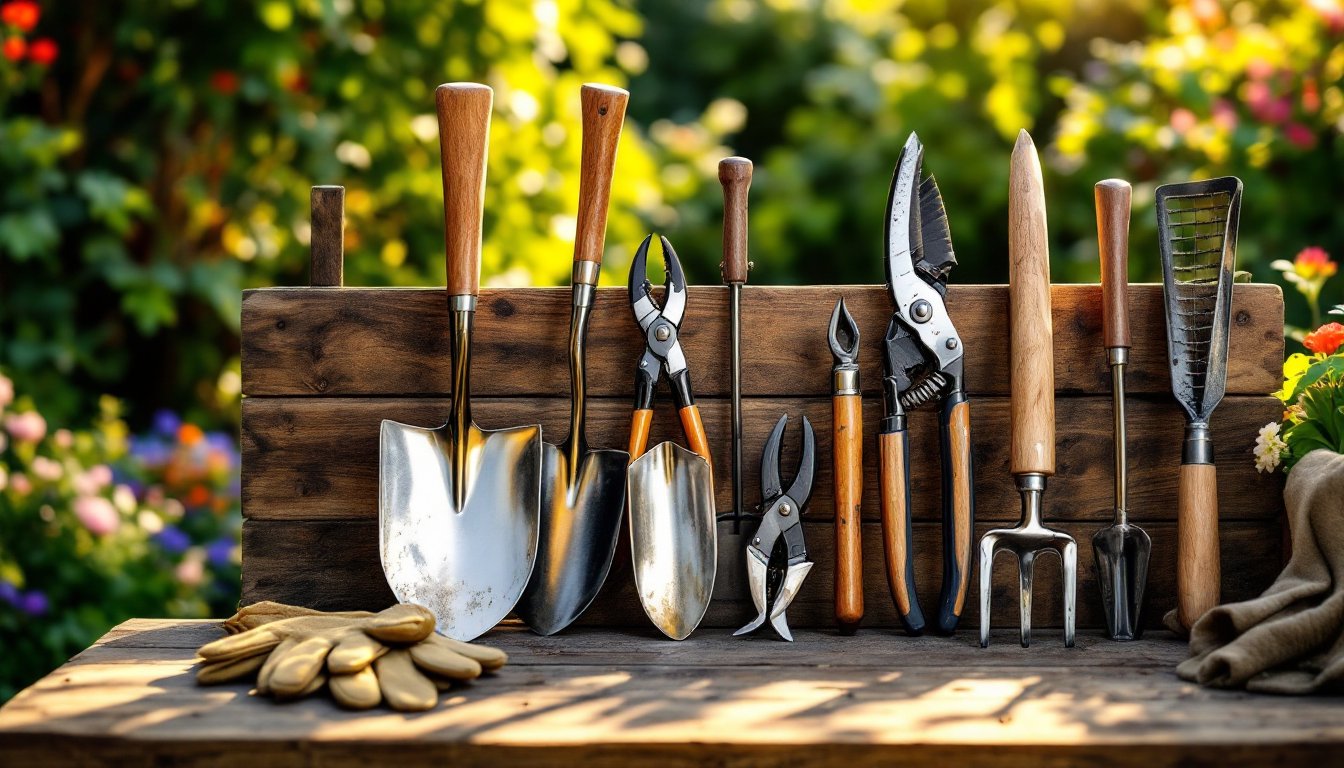
A spade and a shovel aren’t the same tool, and mixing them up leads to frustration. A spade has a flat, rectangular blade for edging beds, digging straight holes, and cutting cleanly through soil and roots. A shovel has a curved, scooped blade designed for moving loose material like mulch, compost, or gravel.
For garden work, prioritize a sturdy spade first. Look for one with a forged steel blade (not stamped) and a handle around 48 inches long, long enough for leverage without hitting your shins. Weight matters: 7 to 8 pounds is ideal for sustained digging without exhaustion. Test the grip if possible: it should sit comfortably in your hand without twisting.
A shovel with a turned edge (lip) on the blade makes scooping easier and more efficient. A 48-inch handle is standard, but taller gardeners might prefer 50 inches. If you’re doing serious mulch or compost hauling, a shovel is non-negotiable. If you work mostly with perennials and small beds, a quality spade often suffices on its own.
Safety Note: Always wear heavy gloves when digging: stones, roots, or sharp debris can cut or puncture unprotected hands.
Hand Pruners and Shears
Hand pruners (also called secateurs) are essential for deadheading, shaping shrubs, and removing diseased growth. Two main types exist: bypass pruners (one sharp blade slides past a flat anvil) and anvil pruners (both blades close together). Bypass pruners are gentler on live wood and less likely to crush stems: most gardeners prefer them.
Look for pruners with a curved blade, as they follow the natural angle of plants better than straight designs. Size matters: a blade length of 8 to 9 inches handles most stem widths without strain. Check that the handles fit your hand, too large and you’ll lose control, too small and you’ll overstrain your fingers. Test the locking mechanism: it should click firmly without jamming.
Loppers are long-handled pruners (16 to 20 inches) for thicker branches beyond hand-pruner range. They provide leverage for cuts up to 1.5 inches thick. If your landscape includes established shrubs or young trees, loppers are worth owning.
Hedge shears (manual, two-handed) trim growth evenly across surfaces. Spring-loaded models reduce hand fatigue over long sessions. For small hedges, they’re reliable: for large spaces, cordless electric shears save time.
Maintenance Tip: After each use, wipe pruner blades with a dry cloth to prevent sap buildup and rust. Sharpen blades annually with a honing stone or professional service, dull pruners slip off stems and damage tissue.
How to Choose Durable Garden Hand Tools
Quality comes down to materials, fit, and honest assessment of your needs.
Material Standards:
Look for forged steel blades rather than stamped, they’re stronger and hold an edge longer. Stainless steel resists rust but is softer than carbon steel and can’t hold as sharp an edge: it’s a good choice if you garden in wet climates and won’t sharpen regularly. Hardwood handles (ash, oak) are comfortable and durable: fiberglass is lightweight and won’t splinter: aluminum is light but can flex under load. Avoid plastic handles on heavy-duty tools: they crack under stress.
Fit and Balance:
Hold the tool before buying if possible. The handle should sit naturally in your grip without twisting your wrist. The blade should balance near the joint, a head-heavy tool tires you quickly. Length matters: a 48-inch spade works for most adults, but shorter gardeners or those with mobility concerns might prefer 42 inches. Test the weight: 7 to 8 pounds is standard for a spade, but personal strength and age affect comfort.
Ergonomic Features:
Look for cushioned grips on pruners and shovels, they reduce hand fatigue. Angled blades on some spades reduce back strain by cutting more efficiently. Adjustable locking mechanisms on pruners prevent unwanted snapping or jamming.
Budget Guidance:
Expect to spend $25–$50 for quality pruners, $35–$70 for a spade, and $30–$60 for a shovel. These aren’t hobby expenses, they’re tools you’ll use for years. A mid-range tool from a reputable manufacturer usually outperforms a budget option by years. Avoid impulse buys at discount chains: inspect handles for cracks, test blade sharpness, and check for rust.
Where to Buy:
Local garden centers let you hold and test tools. Online retailers offer wider selection and reviews. Specialty tool suppliers (often pricier) carry commercial-grade options worth considering if you’re serious. Second-hand options exist at antique shops or farm auctions, vintage tools are often excellent quality, though they’ll need cleaning and sharpening.
Conclusion
The seven best garden hand tools, spades, shovels, hand pruners, loppers, hedge shears, trowels, and cultivators, form a solid foundation for most gardening projects. Investing in quality versions of these tools pays off through durability, efficiency, and genuine enjoyment of your work. Take time to choose tools that fit your hand, match your garden’s needs, and come from makers with solid reputations. Keep them clean, store them dry, and sharpen blades yearly. Good tools don’t just make gardening easier, they make it sustainable and satisfying for seasons to come.