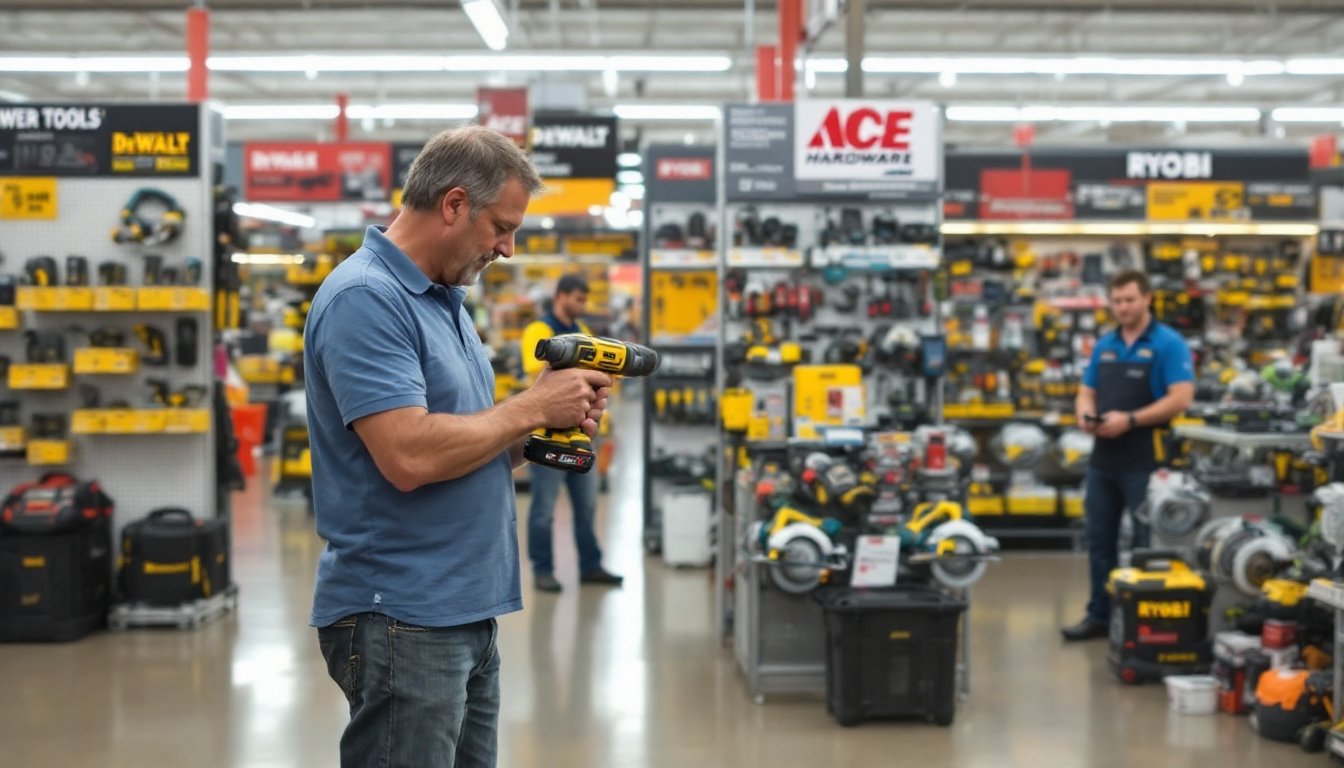
Whether someone’s tackling a deck renovation, hanging shelves, or building a workbench, the right power tools make the difference between a frustrating weekend and a job done right. Ace Hardware has built a reputation as a go-to source for power tools that balance quality, affordability, and reliability, without pushing customers toward unnecessary bells and whistles. With locations in nearly every neighborhood and a solid online presence, Ace carries trusted brands and in-house options that serve both first-time DIYers and seasoned contractors. This guide walks through what Ace Hardware offers, which tools matter most, and how to pick the right power tool for the specific project at hand.
Table of Contents
ToggleKey Takeaways
- Ace Hardware power tools balance quality, affordability, and reliability with trusted brands like DeWalt, Milwaukee, Makita, and budget-friendly Ryobi options that serve both first-time DIYers and contractors.
- Five essential power tools—cordless drill/driver, circular saw, reciprocating saw, orbital sander, and jigsaw—handle 80% of common home projects without unnecessary investment.
- Cordless battery-powered tools have become the standard for residential DIY work due to convenience and safety, with 18V and 20V lithium-ion systems offering sufficient runtime for most tasks.
- Choosing the right power tool starts with identifying your specific task, materials, and precision requirements rather than defaulting to the most powerful option available.
- Stay within a single cordless battery ecosystem to avoid duplicate charging costs and battery expenses, and rent specialized tools for one-off projects instead of buying.
- Test ergonomics, weight, and grip in-store before purchasing, and budget for replacement parts like drill chucks and saw blades when calculating the total cost of ownership.
Why Ace Hardware Stands Out for Power Tool Selection
Ace Hardware’s power tool department reflects a philosophy of local accessibility mixed with practical inventory choices. Unlike big-box retailers, Ace stores often stock tools selected for regional need, a northern location might emphasize weatherproofing tools, while a renovation-heavy area gets deeper drill and saw inventory. Staff tend to be knowledgeable about what they sell, not just catalog readers, so a quick conversation can clarify whether a tool is overkill for a one-time job or absolutely necessary.
Pricing sits in the sweet spot between discount retailers and specialty shops. Ace carries its own Ace-brand tools (often rebranded versions of solid manufacturers), which offer good value for occasional use. They also stock DeWalt, Milwaukee, Makita, and Ryobi, giving customers range without overwhelming choice paralysis. Return policies are typically customer-friendly, and local stores let shoppers handle tools before buying, critical for checking balance and comfort.
Popular Power Tool Brands at Ace Hardware
DeWalt dominates Ace’s power tool section and for good reason. Their 18V and 20V cordless systems are industry standards, widely compatible, reliable, and backed by solid warranty support. Milwaukee, pitched toward professional and serious-DIY crowds, offers brushless motors and slightly higher durability at a price bump. Makita provides similar performance in a different battery ecosystem: they’re excellent if a homeowner already has Makita batteries from other tools.
Ryobi is Ace’s budget-friendly gateway brand. A Ryobi drill or circular saw costs 30–50% less than DeWalt equivalents and works fine for light to moderate use. The trade-off is durability and motor grunt, a Ryobi impacts driver won’t drive 100 lags into hardwood all day without overheating, but it’ll hang a shelf without complaint.
Ace-brand tools are less visible but worth checking. They’re often rebranded products from established factories, offering solid performance at a discount. Store staff can usually tell you the origin and real-world reliability. Black + Decker and Skil appear occasionally, filling the entry-level gap. For niche tools (specialty sanders, planers, angle grinders), Ace carries Bosch and Hitachi models, though availability varies by store.
Essential Power Tools for DIY and Home Projects
Most homeowners can complete 80% of common projects with five core tools: a cordless drill/driver, a circular saw, a reciprocating saw, an orbital sander, and a jigsaw. A drill handles fastening and light boring. A circular saw cuts lumber and plywood straight and true. A reciprocating saw demolishes old drywall and cuts curves in structural lumber. An orbital sander flattens rough surfaces fast (way faster than hand-sanding). A jigsaw cuts curves and notches where other saws can’t reach.
Add a miter saw if cabinet work, crown molding, or trim is planned, it beats a circular saw for precise angle cuts. A table saw becomes essential for rip-cutting (lengthwise cuts) in lumber, but it demands respect, space, and proper dust collection. For concrete, masonry, or tile, a rotary hammer or impact driver is non-negotiable: regular drills stall or strip. A level (often 2–4 feet) and a power drill stand may not look glamorous but save hours of straightness headaches.
Cordless vs. Corded Power Tools
Cordless tools have essentially won the DIY world. Battery technology (especially 18V and 20V lithium-ion) delivers enough runtime for nearly every residential task, and no tangle of extension cords. Most Ace stock tilts cordless, with good reason, convenience and safety trump the minor power edge corded tools once had.
Corded tools still matter in niche roles: a corded circular saw rarely overheats during a full day of framing, and a corded impact driver delivers relentless torque for automotive work. For one-off projects, borrowing or renting a corded specialty tool beats buying. Corded tools are also cheaper upfront (no battery investment) and lighter since batteries are omitted. A homeowner choosing for the first time should go cordless unless they’re running a job site or already invested in a different battery ecosystem.
Heavy-Duty Tools for Professional Use
If someone’s running a contracting business or renting tools often, Ace’s professional-tier inventory becomes relevant. DeWalt’s brushless 20V Max lineup and Milwaukee’s M18/M12 systems are contractor favorites, they handle 8-hour days without babying. Brushless motors run cooler, last longer, and deliver more power for the battery size.
For concrete and masonry, an SDS-Plus rotary hammer (like DeWalt’s D25144K or Milwaukee’s M18) pulses rather than rotates when drilling, chewing through concrete faster and with less operator fatigue. These aren’t weekend tools: they’re job-site essentials. Rental is common if only one project uses them.
A professional-grade wet-dry shop vacuum (5+ gallons, 10+ amp motor) pairs with any power saw to control dust, critical on site where cleanup time is money. Pneumatic tools (nail guns, staple guns, air compressors) still rule finish work: they’re lighter, more ergonomic, and faster than cordless equivalents, though setup (hose, compressor) adds overhead. Ace stocks Senco and Bostitch pneumatic systems, along with compressors in 6- to 20-gallon sizes. A contractor considering investing in pneumatic gear should also budget for a 150 PSI rated air hose and proper fittings, cheap hose fails explosively under pressure.
How to Choose the Right Power Tool for Your Needs
Start by naming the specific task, not the tool. “I need to cut 2×4 studs at a 45-degree angle for a ramp” has a different answer (miter saw) than “I need to cut old deck boards into kindling” (circular saw or reciprocating saw). Walk through the exact work, how much of it, material hardness, precision required, and timeline.
Consider battery ecosystem lock-in. If a homeowner already owns DeWalt 20V batteries, buying a Milwaukee drill means duplicate charging and battery costs. Staying within one brand for cordless tools saves money and hassle. That said, a single-tool investment (like a Ryobi drill) needn’t chain someone to Ryobi forever.
Test ergonomics in-store if possible. Weight, grip texture, trigger feel, and balance vary, and matter hugely on a 6-hour project. A lighter tool feels effortless for light work but may lack power for heavy fastening. Check the amp rating (corded) or voltage and amp-hour (cordless): higher isn’t always better, but it reflects capability ceiling.
Read the warranty and check tool lifespan. A 3-year manufacturer warranty is standard: some brands (DeWalt, Milwaukee) back products strongly if registered. Budget for replacement parts (drill chucks, saw blades, sanding pads) in the lifetime cost, cheap tools often have pricey consumables.
Rent before buying if the tool solves one problem. A tile saw for a small bathroom renovation? Rent. A cordless drill for hanging ten shelves? Buy. This calculus changes with frequency, after two rentals, ownership usually wins.
Conclusion
Ace Hardware’s curated selection, knowledgeable staff, and mix of budget and premium brands make it a reliable hub for power tools. Whether investing in a first drill or upgrading a full shop, Ace carries the tools and guidance needed. The key is matching tool capability to the actual job, overkill wastes money, while under-speccing wastes time and frustration. Start with core tools, buy within a single cordless ecosystem, and don’t hesitate to rent or borrow for one-off work. That’s how DIY stays rewarding.