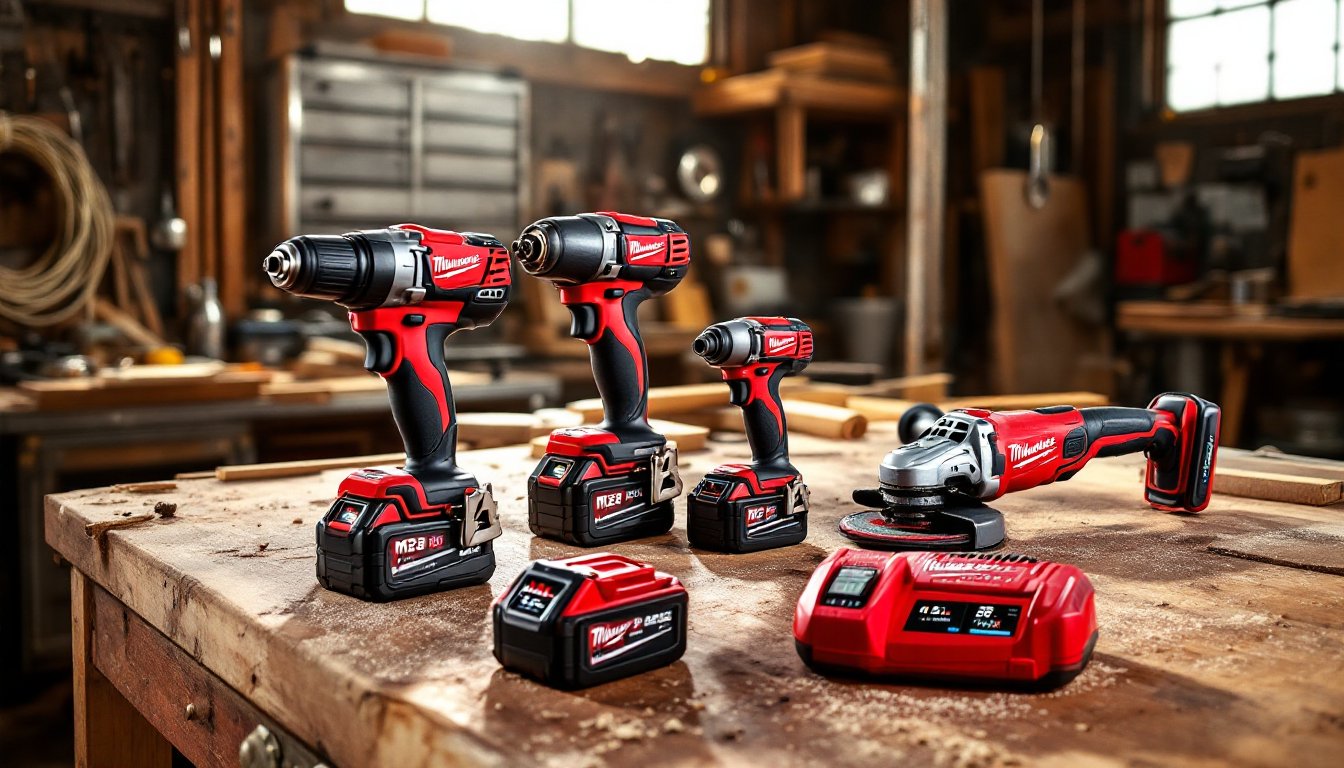
Milwaukee M28 tools represent a solid middle-ground option for DIYers and job-site professionals who want cordless reliability without premium pricing. Part of Milwaukee’s extensive cordless lineup, the M28 system delivers enough power and runtime to handle renovation work, framing, fastening, and light demolition. While not the flagship tier, M28 tools earn their place on plenty of workbenches because they’re genuinely durable, widely available, and compatible with Milwaukee’s 28-volt battery ecosystem. This guide walks through what M28 tools are, how they stack up against other Milwaukee batteries, and which models make sense for different projects.
Table of Contents
ToggleKey Takeaways
- Milwaukee M28 tools offer a proven middle-ground solution for DIYers and professionals, delivering solid durability and power without the premium cost of flagship systems.
- M28 batteries typically provide 50–80 drill holes per charge or 20–45 minutes of cutting time, making a second charged battery essential for uninterrupted project workflow.
- M28 tools are built with reinforced chucks and metal gear housings that withstand 3–5 years of active use, with proper storage and maintenance extending battery and motor lifespan significantly.
- For home renovation projects, an M28 drill, impact driver, and angle grinder cover approximately 80% of cordless tool needs, with a reciprocating saw added for demolition work.
- M28 isn’t the latest platform, but proven quality, wide parts availability, and stable resale value make it a smarter choice than chasing newer systems if it fits your existing tool ecosystem.
- Starting with a combo kit bundled with batteries and charger, plus investing in a second battery and fast charger, ensures smooth project progression without constant downtime.
What Are Milwaukee M28 Tools?
Milwaukee M28 tools are part of the company’s 28-volt cordless lineup, a step up from the compact 18V M18 system but distinct from the professional-grade M24 (fuel) or V28 (voltage) platforms. The M28 platform originally emerged as Milwaukee’s mid-tier solution, offering enough grunt for home renovation projects without the cost of higher-end systems.
These tools run on 28-volt lithium-ion batteries (the original M28 line used older battery chemistry, but current offerings often integrate with newer Milwaukee systems). A key point: older M28 batteries aren’t always backward-compatible with newer models, so check your existing battery before purchasing another tool. The M28 label has evolved over the years, and Milwaukee has consolidated some of this lineup into their broader cordless ecosystem. Today, you’ll find M28-style power in various tool categories, drills, impact drivers, angle grinders, and more, though availability varies regionally.
For a DIYer considering M28, the main appeal is proven durability at a realistic price point. These tools are built to last through years of weekend projects and light-to-medium professional use.
Key Features and Performance Capabilities
Battery Power and Runtime
M28 batteries typically deliver reliable runtime for mixed-use projects. A standard M28 4.0Ah or 5.0Ah battery will power a drill through roughly 50–80 holes in 2×4 lumber, depending on the tool. For comparison, an M18 18V system burns through charge faster on heavy work, while a V28 fuel platform offers longer sustained runtime under load.
Runtime varies by tool type. A circular saw drains the battery faster than a drill because it demands continuous high amperage. Real-world expectations: plan on 20–45 minutes of active cutting per full battery charge on mid-size saws, and 1–2 hours of light drilling or fastening. Keep a second battery charged on the bench, it’s the difference between a smooth project day and frustration.
Battery charging times are reasonable: most M28 chargers hit a full charge in 30–60 minutes, though you’re looking at longer times for larger capacity packs. Cold temperatures slow charging significantly, so don’t leave batteries in an unheated garage overnight in winter.
Durability and Ergonomics
M28 tools are built with Milwaukee’s typical ruggedness: reinforced chucks, metal gear housings, and rubber-over-molded handles. They’re not as compact as M18 tools, but the extra heft translates to better balance during extended use. A Milwaukee M28 impact driver feels solid in your hand, there’s no flex or cheap rattle.
Battery life expectancy is honest: expect 3–5 years of active use before noticeable capacity loss. Store batteries at room temperature, keep terminals clean, and avoid deep-discharge cycles (run the battery to zero, then recharge immediately) to maximize longevity. Milwaukee batteries include fuel gauge indicators on many models, so you can see remaining charge at a glance.
Popular M28 Tool Models and Applications
The M28 lineup includes several workhorses that solve real problems on-site:
M28 Cordless Drills and Drivers are entry points for many users. They handle drywall fastening, light framing, and general boring without breaking a sweat. Chuck capacity (typically 1/2-inch) is standard, and two-speed transmissions (around 0–500 RPM and 0–1500 RPM) give you control for delicate work or bulk fastening.
Impact drivers in the M28 line deliver serious torque, usually 1,200–1,600 inch-pounds, enough for fastening through doubled-up framing lumber or driving lags into rough siding. They’re lighter and faster than a drill for repetitive fastening, and the bit-lock feature keeps hex bits secure under load.
Angle grinders (typically 4.5-inch or 5-inch) cut metal studs, clean welds, and remove grout. Safety note: wear face protection and heavy work gloves. Grinders spin at high speed (10,000+ RPM), and kickback is real if you bind the wheel. Never, ever operate one single-handed.
Reciprocating saws round out the demolition side of the M28 family. They cut through nails, old pipe, and drywall-embedded obstacles faster than a circular saw. Runtime is moderate (30–40 minutes), but the speed and aggression make them ideal for rough work where you’re not worried about a pristine edge.
For most home renovation projects, replacing a bathroom, framing a wall, installing new cabinets, a drill, impact driver, and grinder cover 80% of your cordless needs. Add a reciprocating saw if you’re doing demo work.
Comparing M28 to Other Milwaukee Battery Systems
Milwaukee fields several cordless platforms, and the differences matter for your buying decision.
M28 vs. M18 (18V): M18 tools are lighter and cheaper upfront, and the battery ecosystem is enormous. If you’re starting from scratch, M18 might be smarter, more tool variety, faster recharge, and easier to carry. M28 shines if you already own M28 batteries or need the extra power for demanding tasks like serious cutting or heavy-duty fastening. M18 can do the job, but you’ll swap batteries more often.
M28 vs. V28 (Fuel/Brushless): Milwaukee’s V28 fuel platform uses brushless motors (more efficient, longer runtime, less maintenance) and is the current premium tier. V28 batteries cost more, but you gain 20–30% longer runtime and quieter operation. If budget allows, V28 is the smarter long-term play. If you need cordless tools today and cash is tight, M28 is respectable.
M28 vs. Industry Competitors: DeWalt’s FlexVolt and Makita’s LXT are serious contenders. DeWalt’s FlexVolt switches voltage depending on the tool, offering flexibility. Makita’s LXT is lighter overall and widely available at big-box retailers. Milwaukee M28 doesn’t win on price, but the tool build quality and dealer support are hard to beat. Local availability of batteries and chargers matters, if your favorite tool shop stocks Milwaukee, staying in-system is smart.
Bottom line: M28 isn’t the latest or greatest, but it’s proven, parts are available, and resale value is stable. Don’t chase the newest platform if M28 fits your needs.
Maintenance and Care for Extended Tool Life
M28 tools are low-maintenance by design, but small habits add years to their working life.
Batteries are the most critical component. Store them in a cool, dry place, not in a hot garage or damp basement. Extreme heat kills lithium-ion cells faster than use does. Keep battery terminals clean with a dry cloth: corrosion builds up over time and reduces contact. Don’t leave batteries on the charger constantly after they’re full: trickle charging generates unnecessary heat.
Chuck maintenance prevents slipping bits. If you notice a bit spinning in the chuck instead of gripping, it’s time to tighten or replace the chuck. Most M28 drills use 1/2-inch chucks with a keyed tightener. Tighten from all three sides, not just one.
Filter cleaning applies to tools that kick up dust (angle grinders, reciprocating saws). Blow out the motor vents regularly with compressed air. Sawdust buildup clogs cooling channels and shortens motor lifespan.
Bit and blade care matters. Dull bits waste battery charge and overheat motors. Replace saw blades when they start burning wood instead of cutting cleanly. High-speed steel bits work fine for general carpentry: carbide bits last longer but cost more upfront.
Warranty registration is free and worth 10 minutes. Milwaukee’s standard 5-year warranty covers defects, and registration ensures you’re eligible if something breaks. Keep receipts for proof of purchase.
Getting Started with M28: Practical Recommendations
If you’re new to M28 and building a cordless toolkit, start lean. Buy a drill-and-driver combo kit (usually bundled with batteries and a charger), it’s cheaper than buying pieces separately and you’ll get usable tools right away.
For a first M28 purchase, invest in at least two batteries so one charges while you work. Buy a fast charger if your kit includes a standard one: the 30-minute charger is worth the extra $30–50. Don’t cheap out on extension cords for outdoor work, use a heavy-gauge cord rated for the voltage and amperage, or work within battery range.
Join online Milwaukee user forums or check YouTube for honest reviews of specific M28 models before buying. Real-world user feedback catches quirks that spec sheets miss, things like “the chuck vibrates on fast speeds” or “battery life is solid but heavy.” Your actual projects matter more than marketing claims.
Wrapping Up: M28 as a Practical Choice
Milwaukee M28 tools deliver durability, power, and reliability at a reasonable price point. They’re not bleeding-edge, but they’re not obsolete either, thousands of contractors and home builders still rely on them daily. If you need cordless tools for renovation work, the M28 platform is a solid investment. Battery compatibility, local availability, and your existing tool ecosystem should guide your final choice. Start with one combo kit, add tools as projects demand, and don’t chase every new platform release. Build slowly, maintain honestly, and your M28 tools will serve you for years.