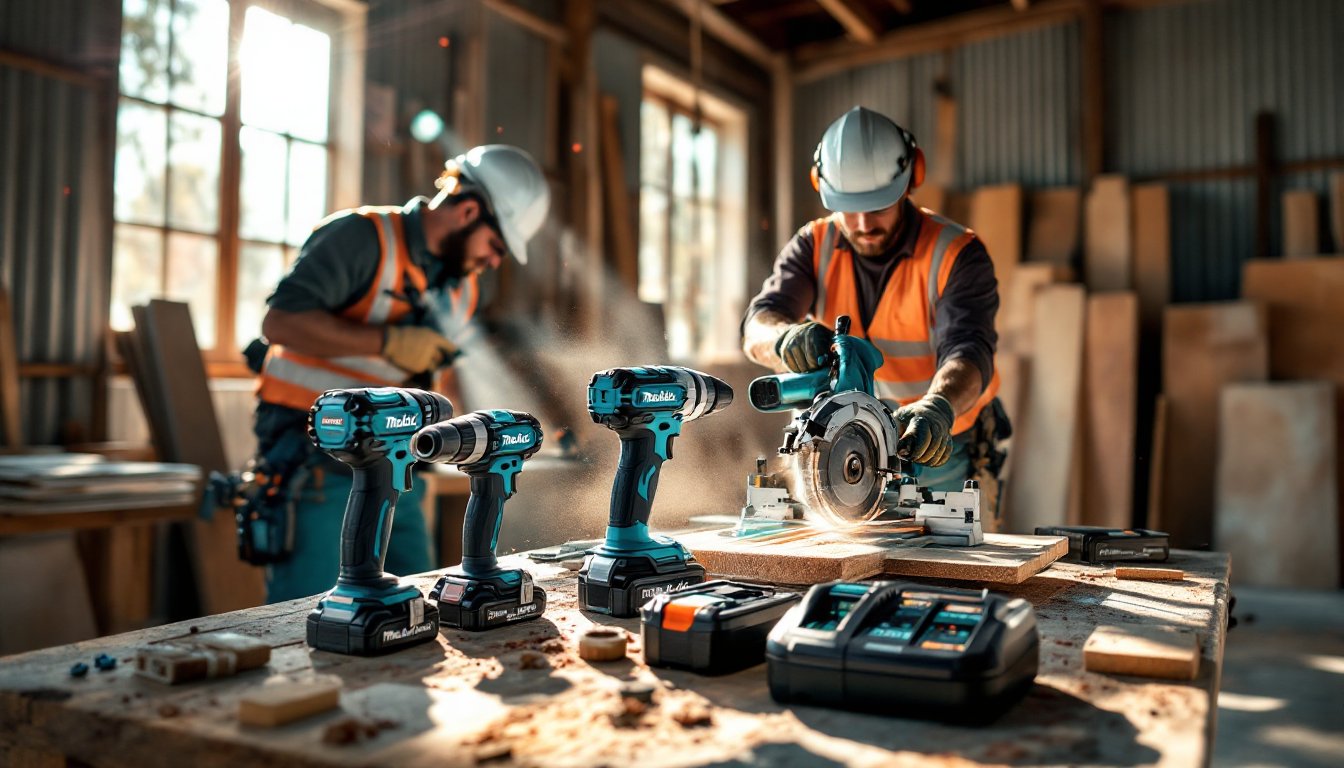
Makita has cemented itself as the go-to choice for serious DIYers and professional contractors across Australia, and for good reason. The Japanese manufacturer’s reputation for durability, innovation, and consistent performance has made its tools standard issue on job sites from Brisbane to Perth. Whether someone’s hanging cabinets in their garage or managing a full-scale renovation, Makita tools deliver the kind of reliability that keeps projects on schedule. This guide walks Australian owners through why Makita dominates the local market, which tools deserve a spot in their workshop, and where to score them at the best prices.
Table of Contents
ToggleKey Takeaways
- Makita tools dominate the Australian market due to superior battery technology, build quality, and an integrated 18V LXT ecosystem that works seamlessly across cordless tools.
- The Makita 18V Cordless Drill-Driver and Impact Driver are essential workshop staples that deliver reliability and reduce operator fatigue on both DIY and professional job sites.
- Essential cutting tools like the Makita Circular Saw, Miter Saw, and Table Saw offer precision, durability, and safety features that justify their investment for serious projects.
- Makita tools in Australia are best purchased through authorized retailers like Bunnings, specialist tool shops, or verified online sellers to ensure warranty coverage and battery authenticity.
- Entry-level Makita cordless kits range from $400–$600, with seasonal sales offering 15–25% discounts, while strong local service networks provide peace of mind for tradies and DIYers alike.
Why Makita Dominates The Australian Power Tool Market
Makita’s stronghold in Australia stems from three core strengths: battery technology, build quality, and a tool ecosystem that plays nicely together. The 18V LXT lithium-ion platform that powers most Makita cordless tools has become an unofficial standard among Australian tradespeople. Once someone owns one charger and a couple of batteries, they’re locked into a system, and they rarely regret it.
The brand’s innovation pace sets it apart. Makita invests heavily in motor efficiency and battery chemistry improvements, which translates to longer runtime and better power-to-weight ratios than many competitors. Australian humidity and dust-heavy job sites demand tools built tough, and Makita’s sealed motor designs and reinforced gear housings handle coastal salt spray and red dirt without giving up the ghost.
Trust matters in the Australian market, and Makita’s service network backing is solid. Authorized dealers are plentiful across major cities, spare parts are accessible, and warranty claims are handled without the bureaucratic theater that plagues some imported brands. For tradies who rely on tools for income, that peace of mind is worth a premium.
Essential Makita Tools For DIY And Professional Use
Cordless Drills And Impact Drivers
The Makita 18V Cordless Drill-Driver (DDF482Z) remains a workshop staple for good reason. It offers 13mm chuck capacity, two-speed transmission (0–450 and 0–1,500 rpm), and enough torque to bore through hardwood or drive 100mm deck screws without bogging down. The compact head fits into tight spaces, corner cabinets, under stairs, where full-size models won’t squeeze in. Pair it with a compact 2.0Ah battery and it stays nimble without sacrificing punch.
For fastening tasks where raw torque matters, the Makita 18V Impact Driver (DTD152Z) is the real workhorse. Impact drivers deliver rotational and concussive force simultaneously, so driving coach bolts into hardwood doesn’t feel like wrestling a python. Operators will feel noticeably less wrist strain than with a drill over an 8-hour stint. The lock-on button keeps it spinning without constant trigger pressure, saving finger fatigue on repetitive jobs like installing deck boards or fence rails.
Pair either with the Makita dual-port charger (DC18RD), which tops up two 3.0Ah batteries in 30 minutes, critical when someone’s bouncing between rooms on a renovation. Always keep at least two charged batteries on hand: dead tools mean dead time.
Saws And Cutting Tools
The Makita 7.25-inch Circular Saw (HS7601) cuts fast and straight when used with a guide. It handles 90° and 45° crosscuts cleanly, and the bevel-angle adjustment stays true after hundreds of cuts. Australians using this saw on hardwoods should run a carbide-tipped blade with 40 teeth or higher, cheap blades burn through timber faster and produce a rougher edge that needs sanding. Always use eye protection and hear protection: circular saws are loud and fling debris.
For precision angle cuts, mitering crown molding or crosscutting boards square, the Makita 10-inch Miter Saw (LS1040) is a game-changer. The dual laser guides show exactly where the blade will cut on both sides of the workpiece, eliminating guesswork. It handles 45° bevel angles left and right, and the electric brake stops the blade within three seconds of releasing the trigger, safer around kids and less frustration waiting for cool-down.
For rip cuts down the length of a board, a Makita Table Saw (2704) with a 254mm blade does heavy lifting. It’s not a contractor-grade saw, but it’s robust enough for framing, trimming boards, or breaking down sheet plywood on job sites. Always use the rip fence when ripping, freehand cuts are how kickback accidents happen. Wear closed-toe footwear and never reach over or behind a running blade: use a push stick instead.
Where To Buy Makita Tools In Australia
Australian buyers have several reliable channels for Makita tools. Authorized retailers like Bunnings Warehouse stock the core range across all major cities and online. Bunnings’ price-match guarantee means customers can leverage competitor quotes, though Makita’s pricing is fairly consistent nationally.
Specialist tool retailers (like Trend Tool Centre and Total Tools) often carry deeper inventory and can order discontinued or specialty items. These shops also employ staff who understand regional differences, someone in Darwin needs different dust management than someone in Tasmania.
Online retailers like Amazon Australia and various tool-specific e-commerce sites offer convenience, but always verify seller legitimacy and check warranty terms. A tool purchased through a non-authorized reseller might not qualify for Makita’s Australian warranty. When buying batteries or chargers online, confirm they’re not refurbished or ex-display stock: off-brand chargers can damage LXT batteries.
Price-wise, expect entry-level 18V kits (drill, impact driver, two batteries, charger) in the $400–$600 range. Premium brushless models cost more but offer better motor efficiency and longer battery life. Regional cost variations exist, Sydney and Melbourne typically see tighter pricing due to higher competition, while remote areas may see 10–15% premiums. Seasonal sales (Black Friday, Boxing Day) yield 15–25% discounts on select items.
Conclusion
Makita tools have earned their place in Australian workshops through consistent reliability, thoughtful engineering, and strong local support. Start with a quality cordless drill and impact driver, add a miter saw or circular saw as projects demand, and the ecosystem grows from there. The investment pays dividends in speed, precision, and peace of mind, especially when a tool fires up reliably on day two of a weekend project instead of joining the graveyard of discount-store impulse buys.